At six years old, I learned how to count carbohydrates before I learned how to multiply.
I remember sitting on a hospital bed, swinging my legs because they didn’t reach the floor yet, listening to doctors explain to my parents how to keep me alive.
That’s when I learned something most six-year-olds don’t have to learn:
That health policy, research funding, and legislative decisions were not abstract political concepts — they determined the quality and length of real lives, my life.
I was diagnosed with Type 1 Diabetes — a chronic autoimmune disease that doesn’t take a single day off, not even the weekends~
And even at six years old, I understood that I had a choice in life.
I could grow up afraid of a system I didn’t control.
Or I could learn how to have a voice within it.
So I chose advocacy.
I became involved in Breakthrough T1D. I found rooms where lawmakers and lobbyists actually listened to patients. I saw firsthand that when people most impacted by policy speak with courage and clarity, change becomes possible.
That belief followed me to the University of Idaho.
I’m Claire Shelton, a proud member of Kappa Alpha Theta and former Idaho Panhellenic Association President; and while my advocacy began in a hospital room, it was strengthened in the chapter room.
Through Theta and our work with CASA — an organization that advocates for children navigating the foster care system alone, I saw something powerful.
I saw students organize.
I saw young women gather around folding tables planning fundraisers that would support children navigating court systems they didn’t choose.
I saw leadership elected. Values debated. Standards upheld. Communities built.
Freedom of association isn’t a legal phrase to me.
It looks like students choosing each other. It looks like shared values becoming shared action. It looks like accountability. It looks like impact.
In November of 2022, my campus experienced an unimaginable tragedy when four Greek life students were murdered. What once felt like a safe, close-knit community suddenly felt uncertain.
As a Panhellenic leader, I wanted to help women feel strong again, not just comforted, but equipped. So I organized a Panhellenic-wide self-defense class for sorority women.
That evening wasn’t just about safety techniques. It was about rebuilding confidence together.
And what made that space powerful was that it was women-only. It was a space where women could speak openly, ask hard questions, and practice without hesitation. That kind of intentional, single-sex environment fosters trust, vulnerability, and empowerment in ways few other spaces can.
Because we have the right to maintain single-sex organizations, we were able to create that space, and in a moment of fear, it made a difference.
Because students are free to organize, I had the opportunity to grow. Not just as a member of my organization, but as a leader in this world. Not just as a patient, but as an advocate for myself and others alike.
That’s why this room matters.
Student organizations are not extracurricular distractions. They are civic engagement accelerators. They are change makers.
They’re where future nonprofit directors learn how to mobilize people. Where future lawmakers learn how to listen and weigh priorities. Where future advocates learn how to stand in rooms like this and speak with confidence.
If I had never been invited into student organizations… If freedom of association had not protected the spaces where I learned to lead… I would not be standing here tonight.
And my story isn’t rare.
Across this country, leadership journeys are beginning in chapter rooms, student groups, and campus organizations every single day.
And students like us belong in rooms like these. Not because we are the future.
But because we are the present.
We are the ones currently navigating campus regulations. We are the ones building communities within the newest landscape of rules, expectations, and accountability standards.
So when policy conversations happen without student voices, something essential is missing.
Protecting freedom of association isn’t about protecting tradition.
It’s about protecting opportunity; and protecting the spaces where students learn to engage responsibly, organize ethically, and contribute meaningfully.
Because when students are free to gather, they don’t just build friendships.
They build conviction. They build competence. And sometimes, they build the courage to stand in Washington, D.C. and speak in rooms like these.
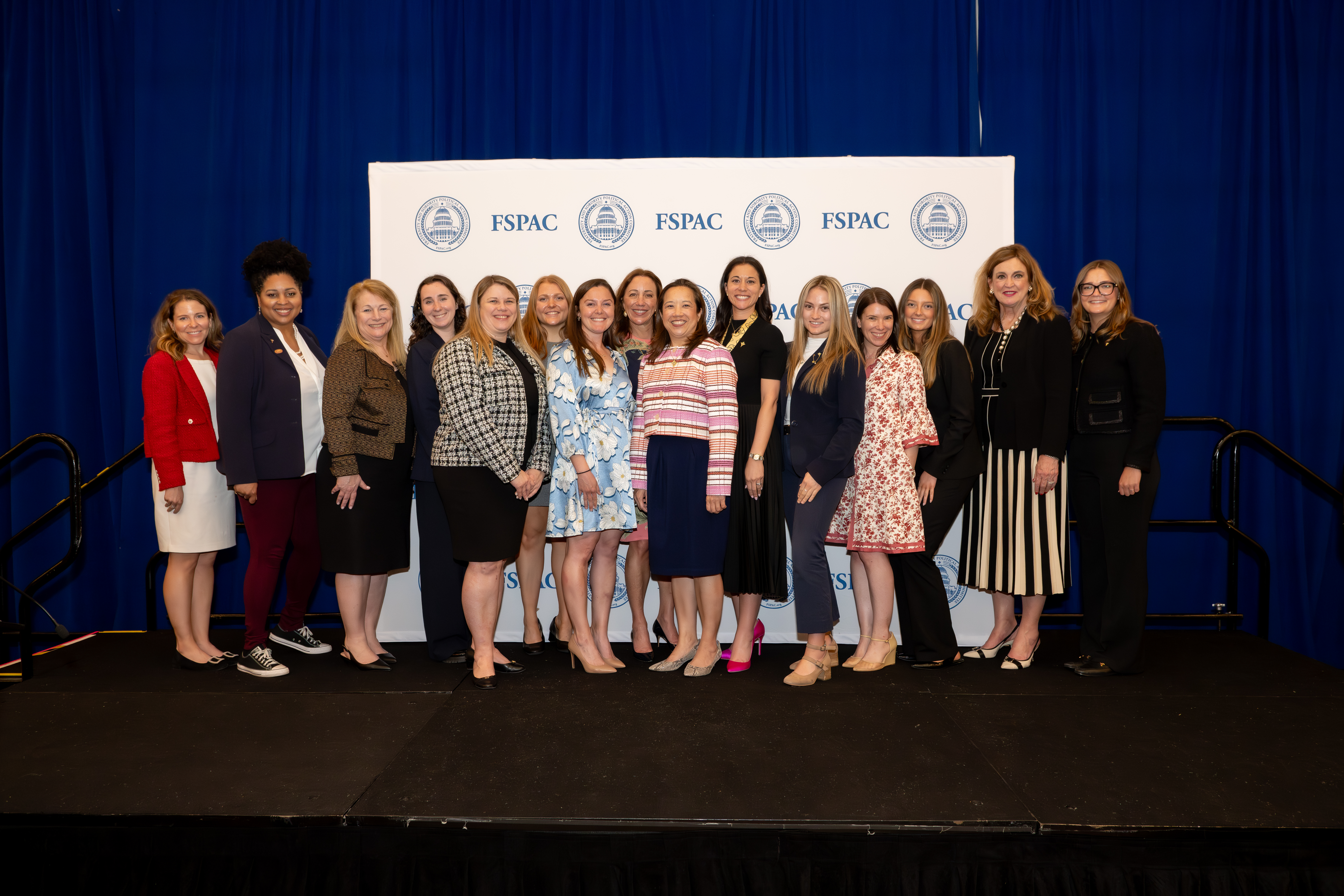
I’d personally like to thank you, The Fraternity and Sorority Political Action Committee, for believing that student voices belong in this conversation and for recognizing that the right to organize on campus is directly connected to the strength of our civic future.
If student organizations didn’t exist, I wouldn’t be standing here tonight.
And I hope we continue to ensure that students across this country always have the opportunity to stand in rooms like this one, ready to lead.
Thank you.
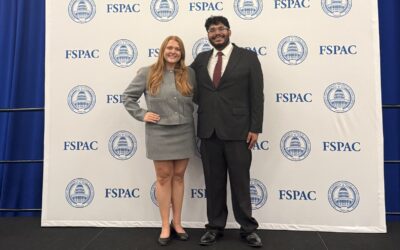
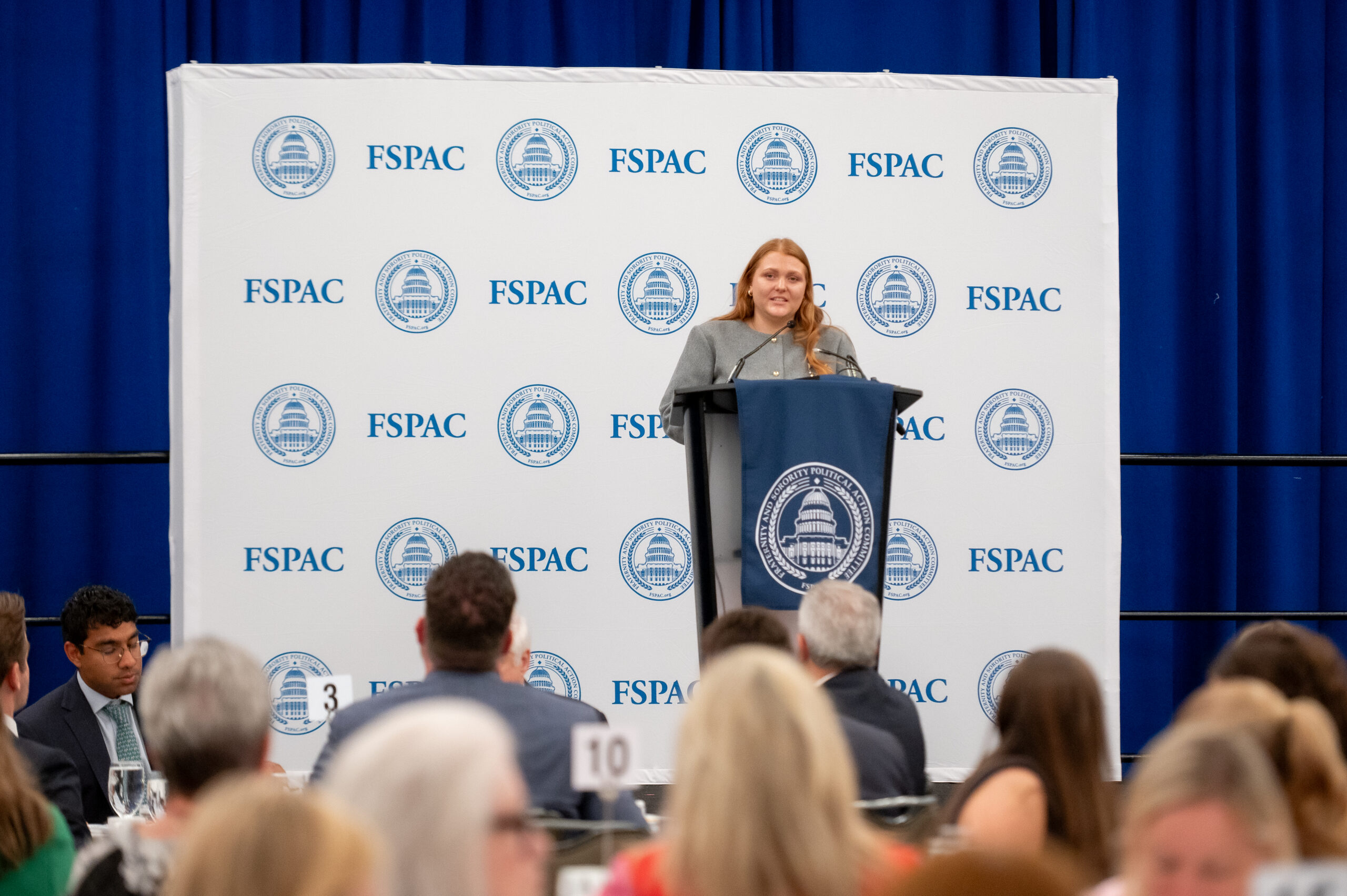
Claire Shelton is a senior at the University of Idaho and a member of Kappa Alpha Theta. She was the female student speaker at the 2026 FSPAC Congressional Dinner on April 15, 2026.